

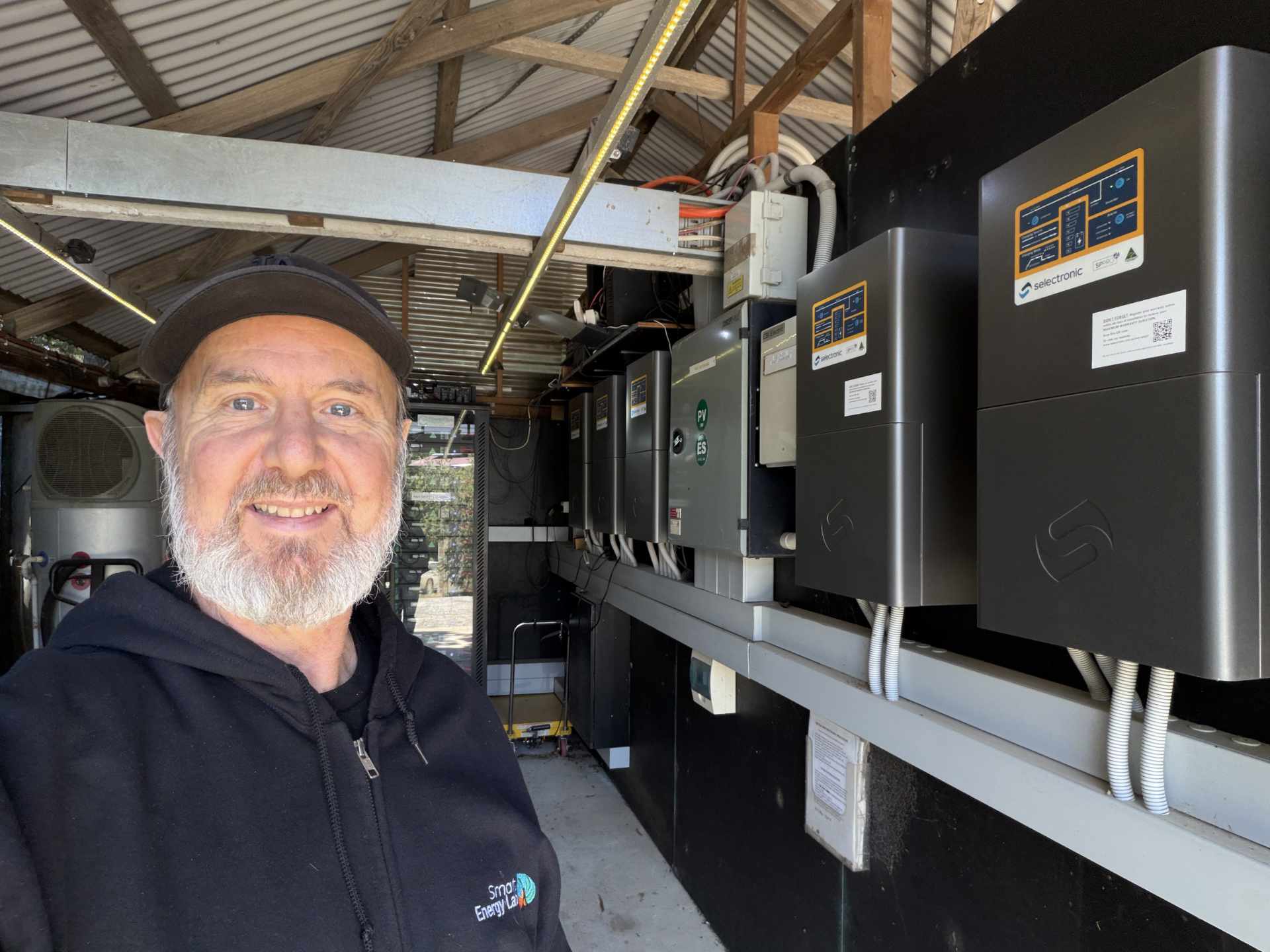

Update your knowledge of current solar and battery standards
Includes AS/NZS 5139:2019 + Amendment No.1, AS/NZS 5033:2021 and AS/NZS 4777.1:2024
Live Interactive Online Training
Two 4-hour sessions
Course Description
This live online course consists of two four-hour interactive sessions designed to provide participants with a clear, practical understanding of the key safety and installation standards governing solar PV and battery energy storage systems.
The course covers the application and interaction of AS/NZS 5139, AS/NZS 5033 and AS/NZS 4777.1, explaining what has changed, why it has changed, and how this affects system design, installation, inspection and certification in Australia and New Zealand.
Strong emphasis is placed on:
- Correct interpretation of each standard
- Understanding where standards overlap or conflict
- Applying requirements in real-world installations
- Avoiding common compliance errors seen in the field
Participants will gain a structured understanding of how PV arrays, inverters and battery systems integrate into a compliant electrical installation, including their relationship with the Wiring Rules, product compliance frameworks and regulatory enforcement.
The training is suitable for designers, electricians, inspectors, engineers, technical support staff, educators and regulators involved in grid-connected, hybrid and off-grid systems.
Session 1: PV Systems and Inverter Installation (4 hours)
Module 1: Regulatory Framework and Standards Interaction
- Overview of the Australian and New Zealand electrical regulatory framework
- Roles of standards in system compliance
- How AS/NZS 5033, AS/NZS 4777.1 and AS/NZS 5139 interface with AS/NZS 3000
- Role of regulators, DNSPs and inspection bodies
- Product compliance and certification pathways
Module 2: AS/NZS 5033 – PV Array Installation Requirements
- Scope and application of AS/NZS 5033
- PV array wiring systems and segregation requirements
- DC isolators, switching and disconnection requirements
- Cable selection, protection and installation methods
- Earthing, bonding and equipotential requirements
- Arc fault risk and mitigation
- Labelling and documentation
Module 3: AS/NZS 4777.1 – Inverter Installation Requirements
- Scope and key definitions under AS/NZS 4777.1
- Installation requirements for grid-connected inverters
- Location, mounting and environmental considerations
- AC wiring, protection and isolation
- Multiple inverter systems and supply arrangements
- Interaction with DNSP requirements
- Changes introduced in the 2024 revision
Module 4: System Integration – PV and Inverter Design
- Designing compliant PV + inverter systems
- Coordination between DC and AC requirements
- Interface between PV arrays, inverters and switchboards
- Common design errors and compliance failures
- Inspection considerations and practical examples
Session 2: Battery Systems and Integrated Compliance (4 hours)
Module 5: AS/NZS 5139 – Battery System Fundamentals
- Purpose and scope of AS/NZS 5139
- Battery system definitions and classifications
- Energy capacity thresholds and compliance implications
- Battery technologies and associated risks
- Relationship to AS/NZS 3000, AS/NZS 5033 and AS/NZS 4777.1
Module 6: Installation Requirements and Amendment No.1 Updates
- Battery location and separation requirements
- Fire safety, barriers and enclosure requirements
- Ventilation and environmental considerations
- Key changes introduced by Amendment No.1
- Clarifications affecting real-world installations
Module 7: Integrated System Design and Compliance
- Designing compliant PV + inverter + battery systems
- Interaction between DC, AC and battery requirements
- Hybrid and off-grid system considerations
- Upgrades, retrofits and system alterations
- Responsibilities of designers, installers and inspectors
Module 8: Case Studies, Compliance Pitfalls and Q&A
- Real-world installation scenarios across PV, inverter and battery systems
- Identifying and resolving common non-compliances
- Interpreting grey areas across multiple standards
- Inspection and certification considerations
- Interactive Q&A session
Course Details
Schedule:
- Tuesday 26 May 2026, 9:00 am – 1:00 pm AEST (11am – 3pm NZST)
- Wednesday 27 May 2026, 9:00 am – 1:00 pm AEST (11am – 3pm NZST)
Delivery:
Live, interactive online training
Course Fee:
Early-Bird Offer
- Early-bird course fee: AUD $295 (GST excluded)
- Valid for registrations received on or before 11 May 2026
Standard Course Fee
- AUD $345 (GST excluded)
- Applies to registrations received from 12 May 2026 onwards
Inclusions:
- Live online training with interactive discussion and Q&A
- Presentation slides and reference materials
- Practical case studies and compliance guidance
- Post-course reference resources
Registration is confirmed upon payment of the course fee.

Reviews
There are no reviews yet.